Every September and March, my phone lights up with the same questions. A freshman headed to UCI wonders if it is worth shipping the family Civic from Chicago. A retired couple in Turtle Rock debates whether to drive their crossover to Scottsdale for the winter or hire a carrier. Different life stages, same logistical knot. The decision looks simple until you dig into timing around dorm move-in or HOA rules at a retirement condo in Palm Desert, the microclimate quirks that rust undercarriages, and the way carriers actually price routes to and from Irvine. After a decade helping people coordinate moves across the 5, I have seen the patterns, the gotchas, and the workarounds that save both cost and stress.
What follows is a practical, experience-based guide with a focused checklist for two groups who rely on Irvine vehicle shipping the most: students and snowbirds. The specifics matter here, from campus loading zones to the difference between open and enclosed carriers during Santa Ana wind events. You will also find real timelines, sample prices drawn from common routes, and a hard look at trade-offs like door-to-door convenience versus a terminal drop that keeps your HOA happy.
The lay of the land: how Irvine vehicle transport actually works
Irvine sits in a sweet spot for carriers, close to the 5, 405, and 55. That means trucks can load and unload without detouring far off their national corridors. Yet Irvine is not a trucking hub like Fontana or the ports, so most long-haul rigs pass through rather than stage there. This shapes what you can reasonably expect: solid availability with a little lead time, especially in shoulder seasons, but more constrained options during peaks such as August move-ins and pre-holiday snowbird departures.
Most orders in and out of Irvine are handled by brokers who coordinate with independent carriers. The broker posts your job to a national load board with your preferred dates, budget, and equipment type. Carriers accept based on their planned routes. The best brokers know how to price at a level that attracts reliable carriers without overpaying. The worst promise a rock-bottom rate, then spend two weeks “working on it” because no driver will accept that price. If you book with a direct carrier, you trade flexibility and broad coverage for a specific truck and schedule. Both models can work. The key is matching your expectations to how the network operates.

Routes matter. A car traveling Irvine to the Bay Area rides a dense corridor, so trucks are frequent and pricing is competitive. Irvine to a rural college town in the Midwest adds complexity. The truck might go to a nearby metro like St. Louis or Columbus, then hand off to a regional carrier or require a final-mile run that adds cost. If you can be flexible on pickup or delivery points, you can often save money and days.
Timing is everything: when to book and why it shifts
For students, the window around late August and early September is high demand. Rates climb 10 to 25 percent in that period, sometimes more on East Coast lanes. Winter break pushes a smaller spike in December, then a bump in January for returns. For snowbirds, October and early November outbound from Orange County to Arizona, Nevada, and Florida run hot. The reverse flow in March and April can also tighten supply.
Lead time is insurance. A one to two week booking horizon usually secures normal rates out of Irvine for domestic routes within 1,500 miles. If you are trying to catch a move-in target date at UCI or an HOA gate window in La Quinta, add buffer. Three weeks is not overkill when you have fixed access times. If your car must arrive between Friday and Sunday, tell the broker on day one. Carriers will build in an extra layover rather than gamble on a Saturday receiving deadline.
Irvine’s weather rarely cancels trips, but regional events ripple. Santa Ana winds can force carriers to slow or alter routes, which adds a day. Mountain passes into Utah and Colorado in early winter can shut down for a night, tightening capacity further east and nudging prices. Plan around those realities, not just your calendar.
What it really costs from Irvine
Every broker gives ranges because carrier bids shift daily. Here is a grounded snapshot for standard sedans and crossovers on open carriers, typical of Irvine vehicle transport. These reflect mid-season rates with reasonable lead time, not the peak surges or last-minute premiums you might see in late August or mid-October.
- Irvine to Phoenix or Scottsdale: 450 to 750 dollars, 1 to 3 days transit Irvine to Las Vegas or Henderson: 450 to 650 dollars, 1 to 2 days transit Irvine to the Bay Area: 400 to 650 dollars, 1 to 2 days transit Irvine to Seattle: 900 to 1,400 dollars, 3 to 5 days transit Irvine to Denver: 900 to 1,500 dollars, 3 to 5 days transit Irvine to Dallas: 1,000 to 1,600 dollars, 4 to 7 days transit Irvine to Chicago: 1,100 to 1,700 dollars, 5 to 8 days transit Irvine to Boston or New York metro: 1,300 to 1,900 dollars, 7 to 10 days transit Irvine to Miami or Tampa: 1,300 to 1,900 dollars, 7 to 10 days transit
Enclosed transport adds 35 to 70 percent. Oversized SUVs or modified cars add 75 to 300 dollars depending on dimensions and ground clearance. Terminal delivery or pickup can shave 50 to 150 dollars, but only if the terminal is reasonably close and your schedule is flexible.
If someone quotes you hundreds below these ranges for a near-term August or October move, ask pointed questions. If the carrier cannot be named 48 hours before pickup, and your deposit is nonrefundable, you may be in for a week of “we’re still working to secure a driver.” Reliable Irvine car transport is about getting on the right truck, not simply chasing the lowest number.
Open vs enclosed, and when coverage matters
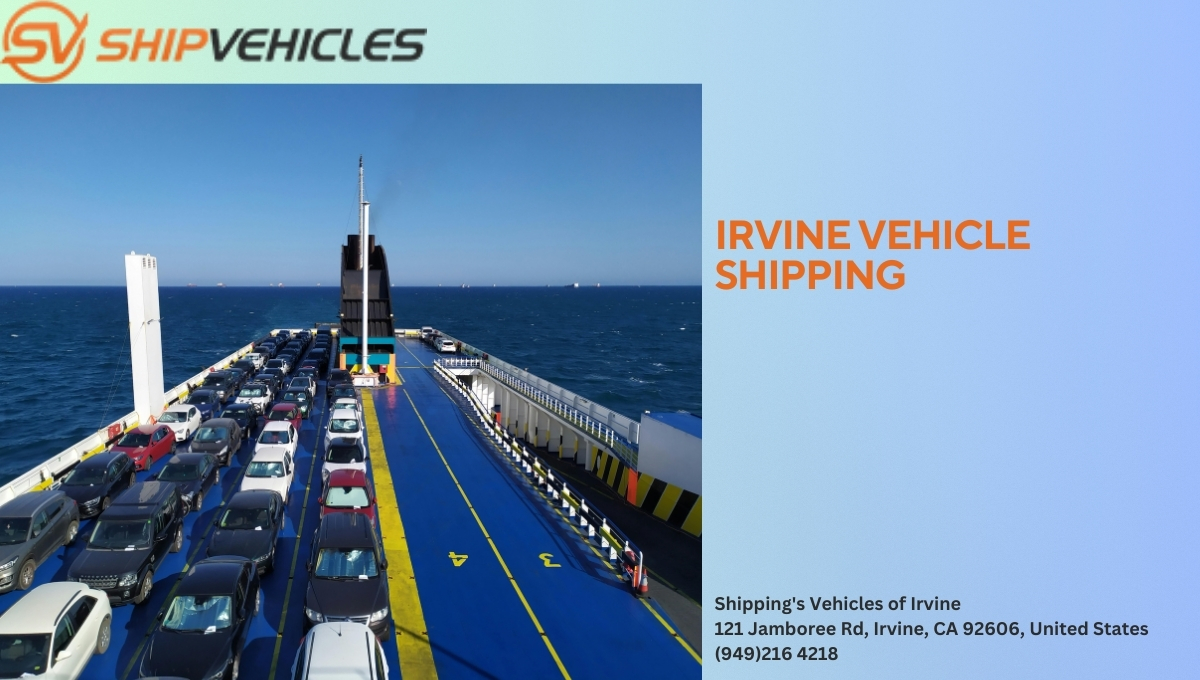
Most students and snowbirds choose open carriers because they are cost effective and widely available. Open is fine for everyday drivers, even on cross-country routes. Cars may arrive dusty after a 1,000-mile run through the desert, but that’s cosmetic.
Go enclosed when the vehicle’s value or vulnerability justifies it. Examples I have handled out of Irvine that made sense for enclosed: a ceramic-coated Model S on brand-new wheels being delivered to a Newport garage, a freshly restored Miata bound for a Bay Area collector, and a newer soft-top convertible traveling during a storm-prone week. If you are moving a vintage car with low clearance, ask for a liftgate trailer. Ramps can scrape.
For open carriers during Santa Ana season, ask for a top row if the truck has a multi-deck. It is not guaranteed, but brokers can request it, and some drivers will honor the request if they have flexibility in their load plan. Top row reduces road debris exposure and drip from cars above.
Insurance and inspections: the fine print that saves headaches
Carriers carry liability and cargo insurance. The industry standard for cargo limits sits between 100,000 and 250,000 dollars per truckload for open carriers, more for enclosed. That is shared across all cars on the trailer. If a catastrophic loss occurs, the coverage is apportioned. It is rare, but anyone who has seen a truck fire on the 10 knows why the paperwork matters.
Do not hand over your keys without a thorough condition report. The driver will conduct a Bill of Lading inspection at pickup and delivery. Walk the car together in good light. Photograph each panel, roof, wheels, windshield, and interior at pickup, then again on delivery before signing. That documentation is your leverage if you need to file a claim. It is not adversarial, it protects you and the driver.
If your personal insurance includes comprehensive coverage and you are shipping a higher-value car, ask your agent if it extends during transport. Some policies do. You are still filing against the carrier first, but it helps to have a second safety net in case a carrier’s policy has exclusions.
Real-world pickup and delivery in Irvine
Irvine’s neighborhoods vary widely in truck access. University Town Center has tighter roads and heavy pedestrian traffic during move-in week. Shady Canyon and some HOAs restrict large commercial vehicles. Many drivers will not attempt a 70-foot rig on narrow, landscaped streets. If you hear the phrase “safe and legal location,” that is not a dodge. It is how carriers avoid tickets and tree damage.
A practical approach looks like this: coordinate pickup at a wide arterial or a mall lot with permission. The Spectrum, The District, and certain edges of the UCI campus have workable surfaces if prearranged. At delivery, meet near a freeway exit with ample shoulder or a big-box parking lot where the carrier has clearance and turning radius. If your HOA is strict, plan to meet outside the gate. I have escorted more than one driver to the outer cul-de-sac during quiet hours with a golf cart leading the way.
On campus, UCI has designated zones for move-in periods. If you try to bring a carrier onto campus without clearing it, expect a quick reroute. It is usually simpler to meet at an adjacent lot. Students without cars that day can ride with a friend or use a rideshare back to the dorm.
Students: what makes your move different
Students juggle financial limits and immovable dates. You are often sharing the plan with your parents, who want reliability over everything. The main friction points I see are overpacking the car, misunderstanding transit windows, and unclear authority on delivery day.
Do not load your car like a storage unit. Carriers are not licensed to transport household goods. A backpack and a couple of boxes are fine if they sit below the window line and don’t add obvious weight. The stricter drivers will refuse a car packed to the headliner. If you need to move belongings, ship boxes separately using ground service to your campus address. The total often costs less than the surcharge and hassle of a loaded vehicle.
Transit windows are estimates, not reservations. A driver might say pickup on Tuesday, plus or minus a day, then delivery in five to seven days. The best brokers communicate delays early. If a driver is making three pickups in LA County, traffic alone can shift times by hours. Build your schedule with slack. If you have orientation on Monday, try to have the car arrive over the weekend before.
Authority matters. If your parent books the shipment but you are receiving in Irvine, make sure the driver knows you are the point of contact with your phone number. You should have the Bill of Lading at delivery, sign only after inspection, and retain a copy.
Snowbirds: seasonal patterns and HOA realities
Snowbirds know their routine, then a minor change throws it off. Gate codes switch. The condo manager insists on specific delivery times. The community bans commercial trucks on Sundays. All solvable, but only if discussed before dispatch.
Book October departures by late September. If you are leaving after Thanksgiving, expect a squeeze. Carriers like Florida lanes in October and November, then refocus as weather shifts. For Arizona and the Coachella Valley, volumes stay strong through early December. Coming back in March, build an extra week for spring break congestion and desert events like BNP Paribas in Indian Wells, which fill hotels and shift local traffic.
If your HOA is strict, consider a safe meeting point near a major road. It keeps peace with the board and makes the driver’s life easier. Terminal options do exist in the greater LA basin, but few are close to Irvine. You will likely drive 20 to 40 miles to retrieve the car, which can defeat the convenience you wanted from door-to-door service.
Some snowbirds carry a secondary car in storage. If you plan to alternate shipping years, keep the battery on a tender, tire pressures at the vehicle placard plus 2 to 3 psi for sitting, and fuel at half a tank or less for shipping. Let the broker know if the car is in a storage unit with limited access. Drivers plan their day around those windows.
The practical checklist
Many people ask for a simple, no-nonsense list they can print. Tape this to your fridge and you will avoid 90 percent of the hassles.
- Book 2 to 3 weeks ahead for peak seasons, 1 to 2 weeks otherwise. Confirm whether your quoted price is likely to dispatch at that rate. Prepare the car: wash exterior, photograph all sides and the roof, remove toll tags, set tire pressure, top off windshield fluid, and reduce fuel to a quarter tank. Remove loose items. Bring your essentials with you and avoid packing household goods in the car. Secure one small box if necessary, below window line. Share accurate access details: gate codes, truck restrictions, and preferred meeting points. Provide two contact numbers that will be active on pickup and delivery days. On the day: meet at a safe, wide location. Inspect with the driver, record any marks on the Bill of Lading, and photograph again at delivery before you sign.
Common mistakes and how to avoid them
I have watched well-meaning people make predictable errors. The first is chasing a teaser quote. It feels good to see a number 200 dollars below the market. The broker takes your deposit, but no carrier accepts the load because the price is not viable. Days pass, and your travel Irvine auto shippers plans unravel. The fix is pragmatic: ask the broker, “What rate will dispatch within 48 hours on this lane?” If the answer feels vague, find a broker who gives a concrete target or a range tied to real carrier movement.
Another mistake is rigid timing. A student insists on pickup at 2 p.m. Thursday because a friend has a class at 4. The driver will not promise a precise hour in Orange County traffic. Offer a window or arrange a neighbor or building manager to release the keys with a signed authorization. The driver’s day involves multiple loads and weigh stations. Your flexibility is the grease that keeps the timeline intact.
The third mistake is overconfidence about access. HOAs can be unforgiving, and Irvine landscaping is meticulous. A carrier clipping a branch is a problem you do not want. Walk your street mentally with a 70-foot rig in mind. If it cannot turn or park without blocking, pick a different location.
Equipment quirks that affect your car
Lowered cars and long overhangs are a driver’s puzzle. If you have a sports car with a front lip or a low nose, say so up front. Drivers can bring ramps or select a lower-angle trailer. I watched a patient carrier load a lowered BRZ at the District using extra boards and a near-flat deck. That car traveled flawlessly because the equipment matched the need. If you spring that surprise at pickup, a driver might cancel or charge extra.
Roof accessories and loose parts matter. Remove bike racks and storage pods. Fold mirrors. Secure spoilers or add a note if aftermarket parts are fragile. I have seen a flimsy aftermarket splitter crack from wind at highway speed on the top rack of an open trailer. Five minutes with a hex key on pickup day would have prevented it.
Alarm systems can trigger during transport. Disable motion sensors if your car has them, and make sure the driver has a key fob that can disarm the system. A car blaring for three states is rough on everyone.
Communication cadence that keeps you sane
Silence breeds anxiety. A good broker gives you three touchpoints: confirmation of dispatch with the carrier’s name and MC number, a pickup-time window the day before, and a delivery ETA 24 hours out. The driver should call a few hours before arrival. If you have not heard anything 48 hours before the requested pickup date, call your broker for an update. Ask where your job sits on the board and whether an adjustment in price or date would help.
Texting is convenient, but voice calls solve problems faster when a driver is juggling traffic and parking. Keep your ringer on during the pickup window. If you miss a call and the driver moves to the next pickup, you may lose your slot.
When Irvine vehicle shipping beats driving, and when it doesn’t
Driving can be the right choice for short routes and flexible schedules. A run to Phoenix is a day trip if you like the open road. The moment you add hotel nights, gas at 4 to 6 dollars per gallon, meals, and a return flight for a second driver, the math shifts. For a student shipping from the Midwest, the car would face a 2,000-mile haul, two or three hotels, and four days lost. Paying a carrier to do that work makes sense.
For snowbirds, consider your energy and risk tolerance. If you enjoy the road and plan to stop in Palm Springs, then Joshua Tree, shipping may be the wrong fit. If you want to fly in and find the car waiting at a predictable time, the value is in the reclaimed days and reduced wear on your vehicle.
Using Irvine vehicle shipping without losing control
The best experiences share a theme: clear expectations. You set realistic dates, share accurate access details, prepare the car, and pick the right equipment for your vehicle. You treat Irvine vehicle transport as a partnership among you, the broker, and the driver. When something shifts, you get a straight update and adjust rather than scramble.
Irvine is made for this kind of logistics. The roads are wide where they need to be. The freeway grid gives drivers options. You can meet at the Spectrum, the Great Park, or a business park with ease. With a little planning, a student can arrive for week one with a car ready for grocery runs to Albertsons and late-night study sessions off campus. A snowbird can land at John Wayne, take a short ride to a nearby lot, and drive home in minutes, not hours.
Not every situation fits a script, but the fundamentals hold. Price within the market. Book with lead time. Document the car. Communicate. If you do those things, Irvine car transport feels less like a gamble and more like what it is at its best, a professional handoff that respects your time, your budget, and your vehicle.
A few extras worth considering
- If your car has toll transponders, remove or shield them with foil. Trailers pass through toll readers that can trigger charges if the tag scans. For EVs, ship at 30 to 60 percent state of charge. High charge levels can stress the pack during heat. Provide a mobile connector in the trunk, but do not expect carriers to charge en route. If your schedule is tight, ask about a smaller wedge trailer for pickup or delivery. They maneuver more easily in suburban streets, though they carry fewer cars and may cost slightly more. If a driver requests cash on delivery, that is normal in this industry. Many carriers prefer certified funds. Clarify payment method upfront to avoid a scramble at the curb. Keep a small emergency kit in the trunk: tire inflator, pressure gauge, and basic tools. Things shift during transport. A quick check at delivery heads off minor issues.
The process rewards people who think two steps ahead. Students and snowbirds in Irvine who follow this checklist rarely call me with a crisis. They text a photo of their car in the sun, parked where it belongs, and ask for the driver’s number for next time. That is the goal: make vehicle shipping a smooth, repeatable part of your seasonal rhythm, not a cliffhanger.
Contact Us
Shipping's Vehicles of Irvine
121 Jamboree Rd, Irvine, CA 92606, United States
Phone: (949) 216 4218